A portable fire pit is an indispensable piece of gear for camping and RV adventures, offering a cleaner, safer, and often permissible alternative to traditional ground fires. These units bring the warmth and ambiance of a fire wherever your journey takes you, especially in 2026 when many campsites enforce strict burn bans. They are compact, easy to transport, and eliminate the hassle of gathering firewood or dealing with extensive cleanup, making them ideal for modern explorers.
In 2026, the market for portable fire pits offers more choices than ever, designed to meet the diverse needs of travelers who prioritize packability, efficiency, and adherence to environmental guidelines. Whether you seek the authentic scent of burning wood or the instant, smokeless flame of propane, selecting the perfect portable fire pit can significantly enhance your outdoor living. This guide will walk you through the essential aspects of choosing, using, and maintaining the ideal portable fire pit for your camping trips and RV excursions.
What is a Portable Fire Pit and Why Do You Need One for Camping and RVs?
A portable fire pit is a self-contained unit designed to safely hold and contain a fire, engineered for easy transport and quick setup in various outdoor settings. Unlike permanent backyard fixtures, these units are compact, often foldable or lightweight, making them perfect for those on the move. For camping and RV lifestyles, a portable fire pit offers numerous advantages that elevate your outdoor experience beyond what a traditional ground fire can provide.
The primary benefit is convenience and accessibility. Many campsites and national parks enforce strict burn bans, especially during dry seasons, prohibiting wood fires. Portable propane fire pits, in particular, are often permitted during these restrictions, ensuring you can still enjoy a cozy blaze. They eliminate the hassle of gathering firewood, managing smoke, and dealing with extensive cleanup. Moreover, they safeguard the environment by preventing burn scars on the ground and reducing the risk of wildfires. Portable fire pits also offer a contained and safer environment, keeping flames elevated and embers away from flammable materials, which is crucial when camping with children or pets. They provide a designated spot for warmth, cooking, and social gathering, making your campsite feel more like home.
Popular Types of Portable Fire Pits
When choosing a portable fire pit, the fuel source is one of the most significant distinctions, influencing factors like ambiance, maintenance, and where you can use it. The two most common types for camping and RVs are wood-burning and propane-fueled models.
Portable Wood-Burning Fire Pits
|
Our Picks for the Best Fire Pit in 2026
As an Amazon Associate I earn from qualifying purchases.
|
||
| Num | Product | Action |
|---|---|---|
| 1 | Fire Pit - 32-Inch Outdoor Wood Burning Firepit with Screen, Poker, and Cover - Outdoor Fire Pits for Backyard, Deck, or Patio by Pure Garden (Black) |

|
| 2 | BALI OUTDOORS Fire Pit with Poker, 32 inch Outdoor Fire Pit Patio, Wood Burning Firepits for Outside with Grill |
|
| 3 | Kingson 26" Outdoor Fire Pit with Grill & Mesh Cover, Wood Burning Steel Firepit with Poker & Star Spark Screen, Heavy Duty Patio Fire Bowl for Backyard, Camping & Garden |
|
| 4 | Fire Beauty Fire Pit for Outside Wood Burning,BBQ Grill Steel Fire Bowl with Spark Screen Cover,Log Grate,Poker for Camping Beach Bonfire Picnic Backyard Garden |
|
| 5 | Wisteria Lane 3 in 1 43" Extra Large Fire Pit for Outside Wood Burning with 2 Adjustable Grills, Outdoor Fireplace with Lid and Fire Poker, BBQ & Bonfire & Round Metal Table for Patio, Backyard |
|
| 6 | HGD 20 Inch Smokeless Firepit with Grill, Portable Wood Burning Fire Pit for Camping & Backyard, Stainless Steel Outdoor Fireplace with Travel Bag, Easy Setup & Compact Storage - Foldable Design |
|
| 7 | SINGLYFIRE 36 Inch Fire Pits for Outside Large Outdoor Wood Burning Crossweave firepit Heavy Duty Steel Bronze Bonfire Pit for Patio Backyard Garden with BBQ Grate,Spark Screen,Log Grate,Poker |
|
| 8 | Fire Beauty 26" Steel Fire Pit with Grill & Diamond Mesh Design,360° Airflow Tech for 80% Less Smoke,XL Flames,Heavy-Duty Portable Outdoor Fire Bowl for Camping, Backyard, Beach (22lbs, 4 Handles) |
|
| 9 | CIAYS Smokeless Firepit, 19 Inch Fire Pit for Camping with Patented Technology, Portable Fire Pit for Outside with Steel Grill Rack, Fire Poker, and Bag, Easy Setup and Storage, Wood Burning |
|
| 10 | Fire Pit - 32-Inch Outdoor Wood Burning Firepit with Screen, Poker, and Cover - Outdoor Fire Pits for Backyard, Deck, or Patio by Pure Garden (Black) |
|
Portable wood-burning fire pits offer the classic campfire experience with genuine crackling sounds and the natural aroma of burning wood. Recent innovations have led to “smokeless” designs that significantly reduce the amount of smoke produced, making them more enjoyable. These systems often use double-wall construction and advanced airflow to create a more efficient, hotter burn.
Pros:
- Authentic Ambiance: Provides the traditional look, sound, and smell of a real wood fire.
- Natural Fuel: Wood is often readily available and can be more cost-effective if sourced locally (check park regulations on bringing outside wood).
- Intense Heat: Can generate substantial radiant heat, ideal for colder evenings.
Cons:
- Smoke and Ash: Even “smokeless” models produce some smoke, and traditional models can be very smoky. Requires ash disposal.
- Fuel Management: Requires gathering, storing, and loading wood, which takes up space.
- Burn Bans: Often prohibited during fire bans, limiting their usability.
- Cleanup: Ash removal and general cleaning can be messier and more time-consuming.
Usage Note: Always ensure the wood you use is dry and seasoned to minimize smoke. Familiarize yourself with local regulations regarding wood collection or purchase.
Portable Propane Fire Pits
Propane fire pits are the epitome of convenience and cleanliness for RV and camping trips. They connect to a standard propane tank (like those for a BBQ grill) or can often be adapted to an RV’s onboard propane supply. They ignite instantly with the turn of a knob and offer adjustable flames and heat.
Pros:
- No Smoke, No Ash: Provides a clean burn, eliminating smoky clothes and messy ash cleanup.
- Instant On/Off: Easy to start and extinguish, offering immediate warmth and ambiance.
- Burn Ban Friendly: Frequently allowed during wood-burning fire bans, making them a reliable option.
- Adjustable Flame: Allows for precise control over heat output and flame height.
Cons:
- No Crackle/Scent: Lacks the sensory experience of a wood fire, including the natural wood scent.
- Fuel Supply: Requires carrying propane tanks, which adds weight and requires refills.
- Lava Rocks/Ceramic Logs: Relies on decorative elements for visual appeal rather than natural logs.
- Less Radiant Heat: While they produce heat, many users find it less intense and radiant compared to a roaring wood fire.
Usage Note: Always check for gas leaks before use and ensure proper ventilation. Never use a propane fire pit inside a tent or enclosed space due to carbon monoxide risks.
Comparing Portable Wood-Burning vs. Propane Fire Pits
Choosing between a portable wood-burning and a propane fire pit often comes down to balancing convenience with the traditional campfire experience. Here’s a comparative overview:
| Feature | Portable Wood-Burning Fire Pit | Portable Propane Fire Pit |
|---|---|---|
| Price | Generally lower initial cost for basic models; fuel cost varies | Moderate to higher initial cost; consistent fuel cost (propane) |
| Durability | Varies by material (stainless steel is common and durable) | Often very durable, typically powder-coated steel or stainless |
| Convenience | Requires wood collection/purchase, fire starting, ash disposal | Instant on/off, no cleanup, easy to transport |
| Safety | Embers, smoke, burn bans; requires constant monitoring | No sparks, no smoke; generally safer, often burn-ban compliant |
| Smoke | Can be significant (traditional) or minimal (“smokeless” designs) | Virtually no smoke |
| Heat Output | Can be very high and radiant | Good, but often more ambient and less intense than wood |
| Fuel | Wood, charcoal, wood pellets | Propane (LPG) |
Top Portable Fire Pits for Camping and RVs in 2026
The market offers a robust selection of portable fire pits, each with unique features catering to different camping and RV styles. Here are some of the most highly-regarded models for 2026:
Outland Living Portable Propane Fire Pit
The Outland Living Portable Propane Fire Pit consistently ranks as a top choice for RVers and campers seeking a convenient, smokeless flame. These units are designed for ease of travel and quick setup, making them ideal for tailgating, road trips, and campsites with fire restrictions.
Key Features:
- High BTU Output: Many models offer substantial heat, often around 58,000 BTUs, providing ample warmth.
- Lightweight & Portable: Weighing around 23-25 lbs, they are easily stowed in an RV bay or car trunk.
- Tool-Free Setup: Quickly sets up without additional tools, connecting to a standard propane tank.
- Included Accessories: Often comes with a cover and carry kit for protection and transport.
- Lava Rocks: Includes lava rocks for an authentic flame appearance and heat distribution.
Pros: No smoke or ash, instant heat, adjustable flame, compact, and compliant with many burn bans.
Cons: Weaker radiant heat than wood fires, requires propane tanks, no crackling sound.
Solo Stove Bonfire 2.0
For those who love the traditional wood-burning experience but want to minimize smoke, the Solo Stove Bonfire 2.0 is a standout. Its innovative design promotes a highly efficient, secondary burn that results in a nearly smokeless fire, allowing you to enjoy the warmth without constantly dodging smoke.
Key Features:
- Smokeless Design: Double-wall construction and unique airflow technology create a hot, efficient burn with minimal smoke.
- Durable Construction: Made from 304 stainless steel, built to withstand high temperatures and outdoor elements.
- Removable Ash Pan: The 2.0 version includes a removable base plate and ash pan for incredibly easy cleanup.
- Portable: Comes with a carry case, making it easy to transport despite its solid build.
Pros: Virtually smokeless, durable, aesthetically pleasing, efficient burn, simple ash cleanup.
Cons: Still requires wood, can be heavier than some propane options, not permitted during all burn bans.
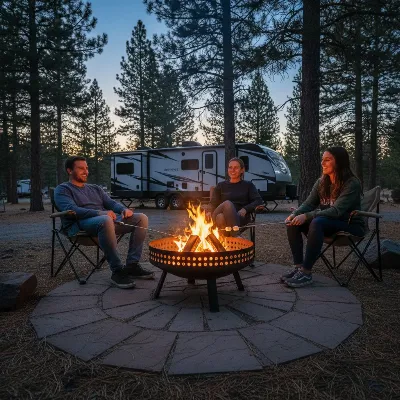 Solo Stove Bonfire 2.0 in use at a campsite with an RV in the background, showcasing its smokeless flame and portable design
Ignik Firecan Series
Ignik offers a compact and rugged line of propane fire pits, known as the Firecan series, which are highly popular among overlanders and RVers for their packability and efficient heat output. Inspired by military ammo cans, these units are designed to be tough and travel-ready.
Key Features:
- Compact “Ammo Can” Design: Extremely durable and easy to store in tight RV bays.
- Quick Setup: Features folding legs and a toolless, quick-release hose for rapid deployment.
- High BTU Output: Models offer up to 37,000-38,000 BTUs, providing significant warmth.
- Mesh Sides: Increases flame visibility and radiant heat transmission.
- Burn Ban Compliant: An excellent option for use during many fire restrictions.
Pros: Ultra-compact, rugged, quick setup, efficient heat, ideal for tight spaces and varied conditions.
Cons: Smaller flame area compared to larger pits, still requires propane tanks, heat is less encompassing than a large wood fire.
Choosing the Right Portable Fire Pit for Your Adventures (Buying Guide)
Selecting the best portable fire pit involves considering your specific needs, camping style, and adherence to environmental regulations.
Assess Your Camping Style and Needs
Before anything else, think about how and where you’ll primarily use your fire pit.
- Purpose: Are you looking for a source of warmth, a cooking appliance, or simply ambiance? Some models are versatile, offering grill grates for cooking, while others are purely for warmth and visual appeal.
- Space & Weight: RVers and car campers prioritize compact storage and manageable weight. Foldable designs (like the UCO Flatpack) or small propane units (like Ignik Firecan) excel in minimizing footprint. Backpackers or minimalist campers might need ultra-light options.
- Group Size: A larger fire pit will accommodate more people and provide greater heat, but will also be heavier and take up more space. Consider the typical number of people around your campfire.
Consider Fuel Type and Regulations
Your choice of fuel type is paramount, especially regarding where you plan to camp.
- Propane for Convenience and Restrictions: If you frequently camp in areas with strict burn bans (common in many national parks and during dry seasons), a propane fire pit is often your only option for a contained fire. They are also ideal if you prefer a quick, clean, and smokeless experience. Many RVs have external propane ports that can connect directly to a propane fire pit.
- Wood for Authenticity and Heat: If the traditional crackle and intense heat of a wood fire are non-negotiable, and you mostly camp where wood fires are permitted, a smokeless wood-burning pit is excellent. Always check local fire regulations and current conditions, as these can change rapidly.
Prioritize Safety Features
Safety should always be your top concern when dealing with fire in the outdoors.
- Spark Screens/Guards: Essential for wood-burning pits to prevent embers from escaping and starting unintended fires.
- Stable Base and Ground Clearance: Ensures the fire pit remains upright and keeps the heat off sensitive ground surfaces, preventing burn scars.
- Certifications: Look for products with safety certifications, especially for propane models, to ensure they meet industry standards.
- Fuel Shut-off: Propane models should have easily accessible and reliable shut-off valves.
- Materials: Durable, heat-resistant materials like stainless steel or powder-coated steel are crucial for longevity and safe operation.
> “The right portable fire pit is the one that aligns with your adventure style and keeps safety at the forefront, allowing you to create memorable moments without compromising the environment or regulations.” – Admin, reviewnghe.com, Fire Pit Technician
Tips for Safe Use and Maintenance
To ensure your portable fire pit provides years of enjoyment and remains a safe addition to your camping gear, proper use and diligent maintenance are key.
- Check Local Regulations: Always, always verify current fire restrictions at your campsite, state park, or national forest upon arrival. Rules can change daily based on weather conditions.
- Site Selection: Place your fire pit on a level, non-flammable surface, away from tents, trees, overhead branches, and other combustible materials (typically at least 10-15 feet). Ensure adequate clearance around the unit.
- Fire Starting (Wood-Burning): Use small kindling and gradually add larger pieces of dry, seasoned wood. Never use gasoline or other accelerants to start a fire.
- Fire Starting (Propane): Connect the hose securely to the propane tank and the fire pit. Slowly open the tank valve, then activate the igniter. Adjust the flame to your desired height.
- Never Leave Unattended: A burning fire, regardless of type, should always be supervised by an adult.
- Keep Safety Tools Handy: Have a bucket of water, a shovel, or a fire extinguisher nearby to address any emergencies.
- Proper Extinguishing (Wood-Burning): Allow the fire to burn down to ash. Douse thoroughly with water, stirring the ashes until they are completely cool to the touch. Do not bury hot embers.
- Proper Extinguishing (Propane): Simply turn off the gas valve on the fire pit, then close the valve on the propane tank. Allow the unit to cool before handling.
- Cleaning: For wood-burning pits with ash pans, dispose of cool ashes in designated receptacles. For all types, clean the unit regularly to remove soot and debris, which can extend its lifespan.
- Storage: Once completely cool and clean, store your portable fire pit in its carry case in a dry place, protected from the elements.
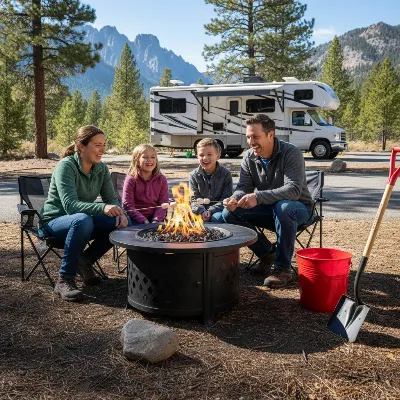 A family safely enjoying a portable propane fire pit at a national park campsite, with an RV in the background and safety gear visible.
Conclusion
Embracing the convenience and safety of a portable fire pit can truly transform your camping and RV experiences in 2026. These versatile units offer a way to enjoy the comforting glow and warmth of a fire, even in locations or conditions where traditional campfires are forbidden. Whether you opt for the authentic crackle of a smokeless wood-burning model like the Solo Stove Bonfire 2.0 or the instant, clean flame of a propane unit such as the Outland Living Fire Pit or Ignik Firecan, you’re investing in countless memorable moments under the open sky.
By carefully considering your needs, understanding the differences between fuel types, and prioritizing safety, you can select the perfect portable fire pit to accompany you on all your adventures. So, pack your bags, choose your fire pit, and get ready to gather around the warmth—where will your next campfire story be told?
Frequently Asked Questions
Can portable fire pits be used during burn bans?
Portable propane fire pits are often permitted during many burn bans, especially “Stage 1” or “Stage 2” restrictions, because they are self-contained, have an instant on/off switch, and produce no sparks or embers. However, wood-burning portable fire pits are typically prohibited during these times. Always check with local authorities or park rangers for current regulations, as rules can vary by location and severity of the ban.
How much heat do portable propane fire pits put out?
The heat output of portable propane fire pits is measured in BTUs (British Thermal Units), typically ranging from 30,000 to 60,000 BTUs. While they provide good ambient warmth, especially for small groups, they generally produce less intense radiant heat compared to a large wood fire. The warmth is usually sufficient for gathering comfortably around the pit, but may not be enough to heat a large area on a very cold night.
Frequently Asked Questions
What are the main benefits of using a portable fire pit for camping?
Portable fire pits offer convenience, safety, and compliance with burn bans, especially for RVers and campers. They eliminate the need for gathering firewood, reduce smoke, and prevent burn scars on the ground, making them a cleaner and more responsible option than traditional ground fires.
Are portable wood-burning fire pits truly smokeless?
Many modern portable wood-burning fire pits, like the Solo Stove Bonfire 2.0, feature innovative designs with double-wall construction and advanced airflow to create a highly efficient, secondary burn. This significantly reduces the amount of smoke produced compared to traditional wood fires, making them nearly smokeless, but some minimal smoke may still occur.
What is the typical weight of a portable propane fire pit?
Portable propane fire pits vary in weight, but many popular models designed for RVs and camping, such as the Outland Living Portable Propane Fire Pit, typically weigh around 23-25 lbs. More compact options like the Ignik Firecan series are often lighter, making them easy to transport and store in tight spaces.
How do I ensure safety when using a portable fire pit?
To ensure safety, always check local fire restrictions, place the fire pit on a level, non-flammable surface at least 10-15 feet from combustibles, and never leave it unattended. For wood-burning pits, use dry wood and have water or a shovel nearby. For propane models, check for leaks and ensure proper ventilation, never using them in enclosed spaces.
What are the key differences between wood-burning and propane portable fire pits?
Wood-burning fire pits offer an authentic crackling sound and natural aroma but produce smoke and ash, and are often restricted during burn bans. Propane fire pits provide instant, smokeless, and ash-free heat with adjustable flames, are frequently allowed during burn bans, but require carrying propane tanks and lack the natural wood scent.
Choosing the Right Portable Fire Pit for Your Adventures
Selecting the best portable fire pit involves considering your specific needs, camping style, and adherence to environmental regulations to ensure a safe and enjoyable experience.
Determine the primary purpose of your fire pit, whether for warmth, cooking, or ambiance. Consider space and weight limitations for RVs or car camping, and the typical group size to choose an appropriate pit size.
Decide between propane for convenience, cleanliness, and compliance with burn bans, or wood for an authentic experience and intense heat where permitted. Always check local fire regulations, as rules can change rapidly based on conditions.
Look for essential safety features such as spark screens for wood pits, a stable base with ground clearance, and safety certifications for propane models. Ensure propane units have easily accessible and reliable fuel shut-off valves, and that the pit is made from durable, heat-resistant materials.
Cooking gear we tested in our own kitchens
Practical specs, not advice. Unsubscribe anytime.

This guide helped me pick out the perfect portable fire pit for our family camping trips. The emphasis on safety and ease of cleanup really resonated with me. We went with a smaller, wood-burning option, and it’s been fantastic for s’mores and just enjoying the ambiance without the usual mess. So glad we invested in one.
I was excited about the idea of a portable fire pit for those 2026 burn bans, but the model I chose (one of the mid-range options) feels a little flimsy. It works, and it’s better than nothing, but I was hoping for something a bit more robust for the price. It gets the job done for now, though.
I recently bought one of the propane fire pits mentioned for our RV trips, and it’s been a game-changer. Setting it up is super fast, and I love not having to worry about finding firewood or dealing with smoke. It’s perfect for those evenings when we just want to relax outside without all the fuss. Definitely recommend for anyone with an RV!
We got the Solo Stove Ranger after reading about its efficiency. It really does burn wood much cleaner than our old pit, and the packability is fantastic for our camping gear. My only minor gripe is that it can be a bit tricky to get a good flame going if the wood isn’t perfectly dry, but once it’s lit, it’s great.