Restoring a rusty metal fire pit safely at home is a completely achievable DIY project that can revitalize your backyard feature. Rust, or iron oxide, forms when iron is exposed to oxygen and moisture, and if left unchecked, it can compromise safety and performance. By following a clear sequence of steps—from preparing your workspace and carefully scrubbing away corrosion to applying protective coatings and committing to regular maintenance—you can effectively remove rust and restore its inviting appearance for countless memorable evenings.
This comprehensive guide will walk you through the process of safely cleaning a rusty metal fire pit, from understanding what causes rust to applying the final protective coating. With a few common tools and a bit of elbow grease, you can transform your fire pit from a neglected relic into a sparkling centerpiece. Let’s get your fire pit looking its best and ready for its next fiery performance.
What Causes Rust on Your Metal Fire Pit?
Rust, scientifically known as iron oxide, is a common enemy of metal fire pits. It forms when iron (a key component in most metal fire pits) is exposed to oxygen and moisture, leading to an electrochemical reaction called oxidation. This process is accelerated by factors such as high humidity, salty air, fluctuating temperatures, and even leftover ash. Ash, being acidic, can trap moisture against the metal surface, creating an ideal environment for corrosion to thrive and speeding up rust formation. Neglecting these early signs of rust not only degrades the fire pit’s appearance but can also lead to weakened metal, holes, and eventually render it unsafe for use. Understanding these culprits is the first step in both removing existing rust and preventing future damage.
Essential Tools and Materials for Rust Removal
Tackling rust requires the right arsenal of tools and materials to ensure both effectiveness and safety. Before you begin, gather everything you’ll need, making sure to prioritize personal protective equipment.
For your personal safety, always wear:
- Heavy-duty gloves to protect your hands from chemicals and sharp metal.
- Eye protection (safety goggles) to shield against rust flakes and cleaning solution splashes.
- A dust mask or respirator when scrubbing or using chemical removers to avoid inhaling rust particles or fumes.
Your cleaning tools should include:
- A metal spatula or small shovel for removing ash and large debris.
- Stiff wire brushes or a wire wheel attachment for a drill for heavy rust.
- Steel wool or heavy-duty scrub pads for general scrubbing and light rust.
- Sandpaper in various grits (e.g., 80-grit to 220-grit) for refining surfaces and stubborn spots.
- Soft cloths or old towels for wiping and drying.
- A bucket, hose, or water source for rinsing.
For rust-removing agents, you have a choice between DIY solutions and commercial products:
- White vinegar: A natural acid effective for dissolving rust.
- Baking soda: When mixed with water, it forms an abrasive paste for scrubbing.
- Mild dish soap: For initial cleaning and general grime.
- Commercial rust removers: These are potent chemical solutions (e.g., Naval Jelly) that work quickly but require careful handling and good ventilation.
Finally, for finishing and protection:
- Rust-inhibiting primer: Creates a barrier against future corrosion.
- High-heat resistant paint: Specifically designed for fire pits to withstand extreme temperatures without peeling or flaking.
- Protective oil or wax: (e.g., coconut oil or cooking oil) can be used as a simple protective layer, especially for cast iron.
- A weather-resistant fire pit cover: Essential for long-term protection.
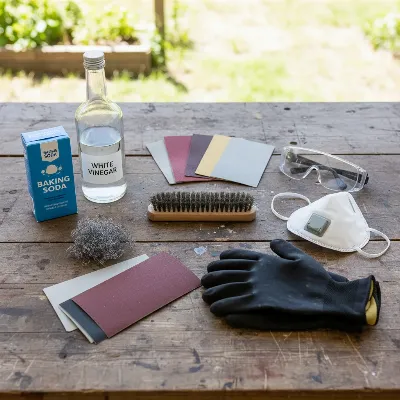 Tools and materials laid out for cleaning a rusty metal fire pit, including gloves, brushes, and cleaning solutions
Step-by-Step Guide to Cleaning a Rusty Fire Pit
Restoring your rusty metal fire pit is a rewarding project that follows a clear sequence of steps. By carefully adhering to this guide, you can safely and effectively remove rust and prepare your fire pit for many more years of enjoyment.
Step 1: Prepare Your Work Area and Fire Pit
|
Our Picks for the Best Fire Pit in 2026
As an Amazon Associate I earn from qualifying purchases.
|
||
| Num | Product | Action |
|---|---|---|
| 1 | SINGLYFIRE 36 Inch Fire Pits for Outside Large Outdoor Wood Burning Crossweave firepit Heavy Duty Steel Bronze Bonfire Pit for Patio Backyard Garden with BBQ Grate,Spark Screen,Log Grate,Poker |

|
| 2 | CIAYS Smokeless Firepit, 19 Inch Fire Pit for Camping with Patented Technology, Portable Fire Pit for Outside with Steel Grill Rack, Fire Poker, and Bag, Easy Setup and Storage, Wood Burning |
|
| 3 | Wisteria Lane 3 in 1 43" Extra Large Fire Pit for Outside Wood Burning with 2 Adjustable Grills, Outdoor Fireplace with Lid and Fire Poker, BBQ & Bonfire & Round Metal Table for Patio, Backyard |
|
| 4 | Fire Pit - 32-Inch Outdoor Wood Burning Firepit with Screen, Poker, and Cover - Outdoor Fire Pits for Backyard, Deck, or Patio by Pure Garden (Black) |
|
| 5 | HGD 20 Inch Smokeless Firepit with Grill, Portable Wood Burning Fire Pit for Camping & Backyard, Stainless Steel Outdoor Fireplace with Travel Bag, Easy Setup & Compact Storage - Foldable Design |
|
| 6 | Fire Beauty Fire Pit for Outside Wood Burning,BBQ Grill Steel Fire Bowl with Spark Screen Cover,Log Grate,Poker for Camping Beach Bonfire Picnic Backyard Garden |
|
| 7 | Fire Pit - 32-Inch Outdoor Wood Burning Firepit with Screen, Poker, and Cover - Outdoor Fire Pits for Backyard, Deck, or Patio by Pure Garden (Black) |
|
| 8 | Fire Beauty 26" Steel Fire Pit with Grill & Diamond Mesh Design,360° Airflow Tech for 80% Less Smoke,XL Flames,Heavy-Duty Portable Outdoor Fire Bowl for Camping, Backyard, Beach (22lbs, 4 Handles) |
|
| 9 | BALI OUTDOORS Fire Pit with Poker, 32 inch Outdoor Fire Pit Patio, Wood Burning Firepits for Outside with Grill |
|
| 10 | Kingson 26" Outdoor Fire Pit with Grill & Mesh Cover, Wood Burning Steel Firepit with Poker & Star Spark Screen, Heavy Duty Patio Fire Bowl for Backyard, Camping & Garden |
|
Safety and preparation are paramount. First, ensure your fire pit has cooled completely before you touch it. Hot embers can be dangerous, and you don’t want to risk burns. Next, choose a well-ventilated outdoor area for your workspace, preferably on a non-porous surface or one covered with a tarp or drop cloth to catch rust flakes and cleaning solutions. Empty any remaining ashes, wood fragments, or debris from the fire pit using a metal spatula or small shovel. Dispose of cooled ashes in a heat-resistant container.
Step 2: Remove Loose Rust and Debris
Begin by taking a stiff wire brush or a wire wheel attachment on a drill (wearing appropriate eye protection and a mask) to physically remove any loose, flaky rust and caked-on debris. This initial dry scrubbing phase is crucial for revealing the underlying rust and allowing your cleaning solutions to work more effectively. Focus on the most heavily rusted areas first, but avoid excessive force that could damage the metal.
Step 3: Apply a Rust-Removing Solution
Once loose rust is removed, it’s time to apply a rust-dissolving agent.
- DIY Solutions (for lighter to moderate rust):
- White Vinegar Method: For smaller, removable parts, you can soak them directly in white vinegar overnight. For the main fire pit, generously spray or pour white vinegar directly onto the rusted areas. Let it sit for at least an hour, or even a few hours for tougher rust.
- Baking Soda Paste Method: Mix baking soda with a small amount of water to create a thick paste. Apply this paste liberally to all rusted spots, ensuring good coverage. Let it sit for a few hours. This method is particularly effective for heavy rust when combined with vinegar.
- Some sources also suggest cola (due to phosphoric acid) or even a potato with salt (oxalic acid) for lighter rust, though vinegar and baking soda are generally more potent and readily available DIY options.
- Commercial Rust Removers (for stubborn rust): These chemical-based products (like Naval Jelly) are highly effective but come with significant safety warnings. Always read the manufacturer’s instructions carefully. Apply the product using an old brush, ensuring you are in a very well-ventilated area and wearing full PPE (gloves, eye protection, respirator). Most products require 15-30 minutes to work.
Step 4: Scrub and Rinse Thoroughly
After the rust-removing solution has had time to work, grab your steel wool, scrub pads, or fine-grit sandpaper. Scrub the treated areas vigorously to physically remove the now-loosened rust. For deep rust, you might need to use sandpaper until the metal’s natural luster begins to show. Once satisfied with the rust removal, rinse the fire pit thoroughly with water. This step is critical to remove all cleaning solution residue, especially from acidic solutions like vinegar or chemical removers, as any remaining residue could continue to corrode the metal. After rinsing, dry the fire pit completely using old towels or by letting it air dry in the sun. This prevents immediate flash rust from forming.
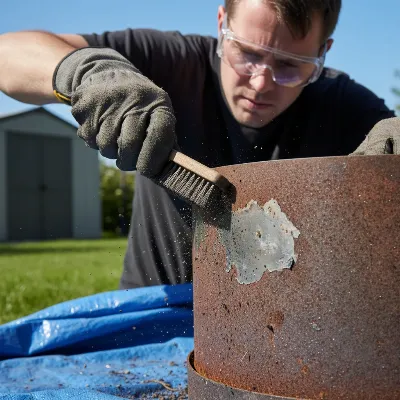 Person wearing gloves and goggles, actively scrubbing rust from a metal fire pit with a wire brush outdoors
Step 5: Protect Your Fire Pit from Future Rust
With the rust gone, the final and arguably most important step is to protect your fire pit from future corrosion.
- Apply Rust-Inhibiting Primer: For comprehensive protection, apply a rust-inhibiting primer designed for metal surfaces. Follow the product’s instructions for application and drying time.
- Apply High-Heat Resistant Paint: Once the primer is dry, apply two to three thin coats of high-heat resistant paint. This specialized paint is formulated to withstand the extreme temperatures of a fire pit without peeling, chipping, or releasing harmful fumes. Choose a color that matches your outdoor aesthetic.
- Consider a Protective Oil Coating: For cast iron or ordinary steel fire pits, a thin layer of cooking oil (like coconut or olive oil) can be applied and allowed to cure in the sun. This creates a simple, effective barrier against moisture.
- Use a Weather-Resistant Cover: Always cover your fire pit with a high-quality, water-resistant cover when not in use. This shields it from rain, snow, and dew, which are primary causes of rust.
Common Mistakes to Avoid When Cleaning Rust
While cleaning rust from a fire pit is a straightforward process, certain missteps can hinder your efforts or even pose safety risks. Being aware of these common mistakes will help you achieve the best results safely.
One of the most frequent errors is neglecting personal protective equipment (PPE). Skipping gloves, eye protection, or a mask can expose you to harmful rust particles, harsh chemicals, or even sharp edges on the fire pit. Always suit up before you start. Another critical mistake is not ensuring complete dryness after rinsing. Any residual moisture, especially when applying new protective coatings, can trap water against the metal, leading to immediate “flash rust” or compromising the adhesion and effectiveness of your paint or sealant. Similarly, ignoring small rust spots can be detrimental; small areas of corrosion can quickly spread, making future cleaning much more challenging and potentially causing irreparable damage. Finally, using harsh chemicals like muriatic acid without proper knowledge or protective measures is extremely dangerous. Muriatic acid can cause severe burns and eye damage, and its fumes are highly toxic. Stick to less aggressive, safer alternatives like vinegar, baking soda, or commercial rust removers designed for home use.
Maintaining Your Fire Pit to Prevent Rust
Preventing rust is far easier than removing it. Regular maintenance is key to extending the life of your metal fire pit and keeping it looking great season after season.
- Clean After Every Use: Make it a habit to clean your fire pit promptly after each use, once it has completely cooled. Remove all ash and debris, as trapped moisture in ash is a primary accelerator of rust.
- Keep it Dry and Covered: Moisture is rust’s best friend. When not in use, ensure your fire pit is completely dry and covered with a high-quality, water-resistant cover. If possible, store it indoors or in a dry, sheltered area like a garage or shed during extended periods of inactivity or harsh weather.
- Apply Protective Coatings Regularly: Periodically inspect your fire pit for any signs of wear on its protective coating. Reapply high-heat paint or a rust-inhibiting primer as needed. For cast iron, a light coating of cooking oil can be a simple, effective barrier.
- Ensure Good Drainage and Airflow: Position your fire pit in an area where water can easily drain away, and airflow is good, preventing moisture from pooling around or beneath it.
- Perform Regular Inspections: Make quick visual inspections a regular part of your routine. Catching small rust spots early allows for quick touch-ups before they become widespread problems.
“A well-maintained fire pit isn’t just about aesthetics; it’s about preserving a safe and functional gathering space for years to come. Proactive care is always more effective than reactive repairs.” – John Smith, Senior Fire Pit Technician at reviewnghe.com
Conclusion
A rusty metal fire pit doesn’t have to signal the end of its life. With the right approach, a bit of effort, and a focus on safety, you can effectively remove rust and restore its inviting appearance. From preparing your workspace and carefully scrubbing away corrosion to applying protective coatings and committing to regular maintenance, each step contributes to your fire pit’s longevity and performance. Consistency in care, particularly keeping it dry and covered, is your best defense against future rust.
By following these guidelines, you’re not just cleaning a fire pit; you’re preserving a hub for warmth, connection, and outdoor enjoyment. What steps will you take this weekend to bring your fire pit back to life?
Frequently Asked Questions
How to Clean a Rusty Metal Fire Pit
Restore your rusty metal fire pit to its former glory by following these steps to safely remove corrosion and apply protective coatings.
Ensure the fire pit has cooled completely. Choose a well-ventilated outdoor area, preferably on a non-porous surface or covered with a tarp. Empty all ashes, wood fragments, and debris, disposing of cooled ashes in a heat-resistant container.
Using a stiff wire brush or a wire wheel attachment on a drill, physically remove any loose, flaky rust and caked-on debris. Wear appropriate eye protection and a mask during this initial dry scrubbing phase to reveal underlying rust.
For lighter rust, apply white vinegar or a baking soda paste and let it sit for 1-3 hours. For stubborn rust, use a commercial rust remover like Naval Jelly, following manufacturer instructions carefully and wearing full personal protective equipment (PPE) in a well-ventilated area.
After the solution has worked, scrub the treated areas vigorously with steel wool, scrub pads, or fine-grit sandpaper until the rust is removed. Rinse the fire pit thoroughly with water to remove all cleaning solution residue, then dry it completely with old towels or by air drying in the sun to prevent flash rust.
Apply a rust-inhibiting primer designed for metal surfaces, followed by two to three thin coats of high-heat resistant paint. For cast iron, consider a thin layer of cooking oil. Always cover your fire pit with a high-quality, water-resistant cover when not in use to shield it from moisture.
Cooking gear we tested in our own kitchens
Practical specs, not advice. Unsubscribe anytime.

I appreciated the emphasis on preparing the workspace safely. I hadn’t thought about some of those precautions before. My fire pit was pretty rusty, and now it’s ready for many more memorable evenings. It’s great to know I didn’t have to buy a whole new one.
The tips on applying protective coatings were helpful, but I found the initial scrubbing part a bit more labor-intensive than I expected. My fire pit had some really stubborn rust spots that took a lot of elbow grease. It’s better, but not perfectly restored like I hoped.
Understanding what causes rust, like the exposure to oxygen and moisture, really helped me prevent future issues. I followed the maintenance tips closely after cleaning, and my fire pit has stayed looking great. Definitely recommend this approach for anyone with a neglected relic.
I was about to give up on my old fire pit, it was looking so bad with all the rust. This guide was a lifesaver! The steps for scrubbing away the corrosion were super clear, and I actually had most of the tools already. It looks almost new again, just in time for summer evenings.