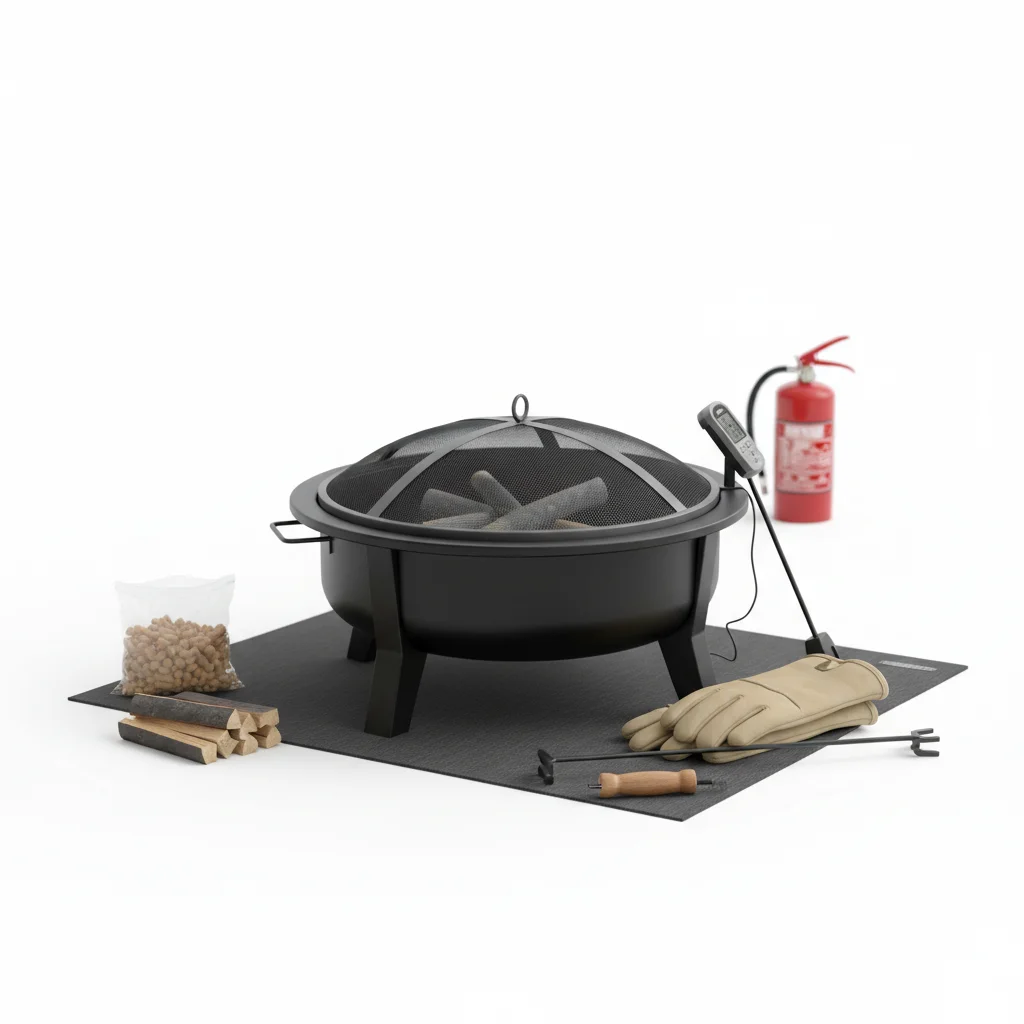
Ensuring portable fire pit safety is paramount for a worry-free outdoor experience. There are five critical safety tips you must follow to prevent accidents and enjoy your fire pit responsibly. From proper placement to extinguishing methods, understanding these guidelines will help you create a safe environment for family and friends.
Choosing the Right Location for Your Portable Fire Pit
The first step in portable fire pit safety is selecting an appropriate location. Always place your fire pit on a non-combustible surface, such as concrete, pavers, or dirt. Avoid wooden decks, grass, or any other flammable materials. Maintain a minimum distance of 10 feet from any structures, fences, trees, or overhanging branches. This clear zone helps prevent sparks from igniting nearby objects. Consider wind direction as well; position your fire pit so that smoke and embers are carried away from people and structures.
Fueling Your Portable Fire Pit Safely
The type of fuel you use and how you handle it significantly impacts safety. For wood-burning portable fire pits, use only dry, seasoned firewood. Avoid using accelerants like gasoline or lighter fluid, as these can cause dangerous flare-ups. Never overfill your fire pit; keep the flames contained within the designated area. If you’re using a propane fire pit, ensure the tank is securely connected and free from leaks. Always store propane tanks upright and away from direct sunlight or heat sources.
Monitoring and Maintaining Your Fire
|
Our Picks for the Best Fire Pit in 2026
As an Amazon Associate I earn from qualifying purchases.
|
||
| Num | Product | Action |
|---|---|---|
| 1 | Fire Beauty Fire Pit for Outside Wood Burning,BBQ Grill Steel Fire Bowl with Spark Screen Cover,Log Grate,Poker for Camping Beach Bonfire Picnic Backyard Garden |

|
| 2 | Fire Pit - 32-Inch Outdoor Wood Burning Firepit with Screen, Poker, and Cover - Outdoor Fire Pits for Backyard, Deck, or Patio by Pure Garden (Black) |
|
| 3 | Kingson 26" Outdoor Fire Pit with Grill & Mesh Cover, Wood Burning Steel Firepit with Poker & Star Spark Screen, Heavy Duty Patio Fire Bowl for Backyard, Camping & Garden |
|
| 4 | Wisteria Lane 3 in 1 43" Extra Large Fire Pit for Outside Wood Burning with 2 Adjustable Grills, Outdoor Fireplace with Lid and Fire Poker, BBQ & Bonfire & Round Metal Table for Patio, Backyard |
|
| 5 | Fire Pit - 32-Inch Outdoor Wood Burning Firepit with Screen, Poker, and Cover - Outdoor Fire Pits for Backyard, Deck, or Patio by Pure Garden (Black) |
|
| 6 | BALI OUTDOORS Fire Pit with Poker, 32 inch Outdoor Fire Pit Patio, Wood Burning Firepits for Outside with Grill |
|
| 7 | SINGLYFIRE 36 Inch Fire Pits for Outside Large Outdoor Wood Burning Crossweave firepit Heavy Duty Steel Bronze Bonfire Pit for Patio Backyard Garden with BBQ Grate,Spark Screen,Log Grate,Poker |
|
| 8 | Fire Beauty 26" Steel Fire Pit with Grill & Diamond Mesh Design,360° Airflow Tech for 80% Less Smoke,XL Flames,Heavy-Duty Portable Outdoor Fire Bowl for Camping, Backyard, Beach (22lbs, 4 Handles) |
|
| 9 | HGD 20 Inch Smokeless Firepit with Grill, Portable Wood Burning Fire Pit for Camping & Backyard, Stainless Steel Outdoor Fireplace with Travel Bag, Easy Setup & Compact Storage - Foldable Design |
|
| 10 | CIAYS Smokeless Firepit, 19 Inch Fire Pit for Camping with Patented Technology, Portable Fire Pit for Outside with Steel Grill Rack, Fire Poker, and Bag, Easy Setup and Storage, Wood Burning |
|
Once your fire is lit, constant supervision is key. Never leave a burning fire pit unattended, even for a moment. Keep children and pets at a safe distance from the flames and hot surfaces. Have a fire extinguisher, a bucket of water, or a garden hose readily available in case of an emergency. Use a spark screen to contain embers and prevent them from escaping, especially on windy days. Regularly check the fire pit’s stability to ensure it won’t tip over.
- Always supervise the fire pit when in use.
- Keep children and pets a safe distance away.
- Have fire extinguishing tools nearby.
- Use a spark screen to contain embers.
- Ensure the fire pit is stable and won’t tip.
Proper Extinguishing Techniques
Extinguishing your portable fire pit completely is just as important as lighting it safely. For wood fires, allow the fire to burn down to coals, then douse them thoroughly with water until all hissing stops and no embers are visible. Stir the ashes to ensure all hot spots are cooled. For propane fire pits, simply turn off the gas supply at the tank. Never cover a hot fire pit immediately after use, as this can trap heat and cause damage or create a fire hazard. Allow the fire pit to cool down completely before moving or storing it.
Post-Use Care and Storage
After your portable fire pit has completely cooled, proper care and storage will extend its lifespan and ensure safety for future use. Clean out any ash or debris once it’s cold. Store your portable fire pit in a dry, covered location to protect it from the elements, which can lead to rust and deterioration. If your fire pit has removable parts, ensure they are clean and dry before reassembling or storing. Regular maintenance checks for any damage or wear and tear will help identify potential safety issues before they become a problem.
Cooking gear we tested in our own kitchens
Practical specs, not advice. Unsubscribe anytime.
