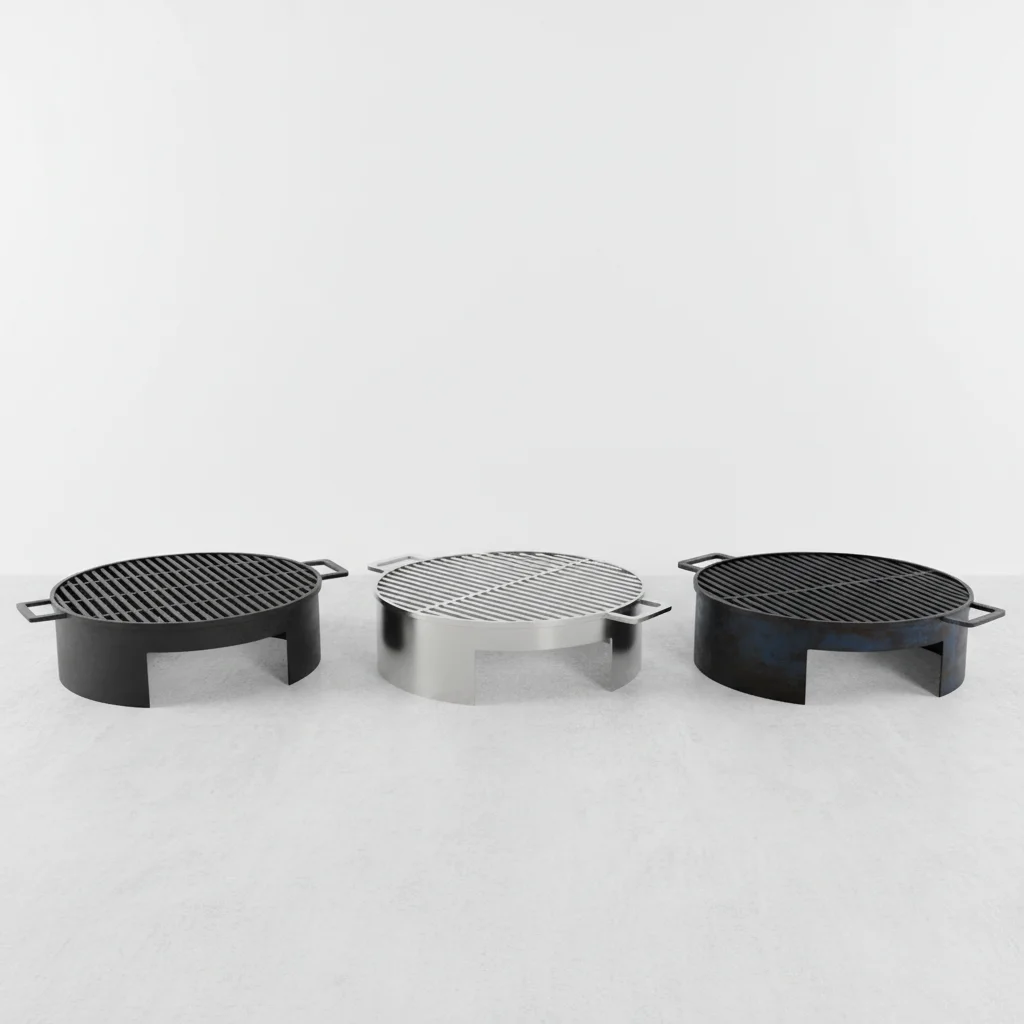
Choosing the right material for your fire pit cooking grill is crucial for both durability and cooking performance. The best material depends on your specific needs, but cast iron, stainless steel, and chrome-plated steel are the three most common and effective options. Each offers distinct advantages in terms of heat retention, maintenance, and longevity, directly impacting your outdoor cooking experience.
Cast Iron Fire Pit Cooking Grills
Cast iron grills are renowned for their exceptional heat retention and even heat distribution. This makes them ideal for searing meats and achieving consistent cooking temperatures across the entire surface. They are incredibly durable and, with proper care, can last for many years. However, cast iron requires seasoning to prevent rust and needs regular cleaning and re-oiling after each use. Neglecting maintenance can lead to rust and a diminished cooking surface. For those who prioritize a perfect sear and are willing to invest in maintenance, cast iron is an excellent choice.
Stainless Steel Fire Pit Cooking Grills
Stainless steel cooking grills offer a fantastic balance of durability, corrosion resistance, and ease of maintenance. They don’t rust like cast iron and are much easier to clean, often requiring just soap and water. While they don’t retain heat quite as well as cast iron, they still provide good cooking performance and are less prone to sticking. Stainless steel is a popular choice for its longevity and low-maintenance nature, making it suitable for frequent use without extensive upkeep. Look for food-grade stainless steel for the best results.
Chrome-Plated Steel Fire Pit Cooking Grills
|
Our Picks for the Best Fire Pit in 2026
As an Amazon Associate I earn from qualifying purchases.
|
||
| Num | Product | Action |
|---|---|---|
| 1 | CIAYS Smokeless Firepit, 19 Inch Fire Pit for Camping with Patented Technology, Portable Fire Pit for Outside with Steel Grill Rack, Fire Poker, and Bag, Easy Setup and Storage, Wood Burning |

|
| 2 | Fire Pit - 32-Inch Outdoor Wood Burning Firepit with Screen, Poker, and Cover - Outdoor Fire Pits for Backyard, Deck, or Patio by Pure Garden (Black) |
|
| 3 | SINGLYFIRE 36 Inch Fire Pits for Outside Large Outdoor Wood Burning Crossweave firepit Heavy Duty Steel Bronze Bonfire Pit for Patio Backyard Garden with BBQ Grate,Spark Screen,Log Grate,Poker |
|
| 4 | Fire Pit - 32-Inch Outdoor Wood Burning Firepit with Screen, Poker, and Cover - Outdoor Fire Pits for Backyard, Deck, or Patio by Pure Garden (Black) |
|
| 5 | Kingson 26" Outdoor Fire Pit with Grill & Mesh Cover, Wood Burning Steel Firepit with Poker & Star Spark Screen, Heavy Duty Patio Fire Bowl for Backyard, Camping & Garden |
|
| 6 | Fire Beauty Fire Pit for Outside Wood Burning,BBQ Grill Steel Fire Bowl with Spark Screen Cover,Log Grate,Poker for Camping Beach Bonfire Picnic Backyard Garden |
|
| 7 | Wisteria Lane 3 in 1 43" Extra Large Fire Pit for Outside Wood Burning with 2 Adjustable Grills, Outdoor Fireplace with Lid and Fire Poker, BBQ & Bonfire & Round Metal Table for Patio, Backyard |
|
| 8 | BALI OUTDOORS Fire Pit with Poker, 32 inch Outdoor Fire Pit Patio, Wood Burning Firepits for Outside with Grill |
|
| 9 | HGD 20 Inch Smokeless Firepit with Grill, Portable Wood Burning Fire Pit for Camping & Backyard, Stainless Steel Outdoor Fireplace with Travel Bag, Easy Setup & Compact Storage - Foldable Design |
|
| 10 | Fire Beauty 26" Steel Fire Pit with Grill & Diamond Mesh Design,360° Airflow Tech for 80% Less Smoke,XL Flames,Heavy-Duty Portable Outdoor Fire Bowl for Camping, Backyard, Beach (22lbs, 4 Handles) |
|
Chrome-plated steel grills are often found in more budget-friendly fire pit setups. They are lightweight and offer a smooth, non-stick surface when new, making them easy to clean initially. The chrome plating provides a degree of rust resistance, but it can wear off over time, especially with high heat and abrasive cleaning. Once the plating is compromised, the underlying steel can rust. These grills are a good option for occasional use or for those on a tighter budget, but they may not offer the same long-term durability as cast iron or stainless steel.
Factors to Consider When Choosing
When selecting a fire pit cooking grill, consider not only the material but also the size, grate spacing, and handle design. A grill that fits your fire pit perfectly will ensure stable cooking, while appropriate grate spacing prevents smaller food items from falling through. Ergonomic handles can make handling and cleaning much safer and easier.
- Cooking Frequency: How often will you be grilling?
- Maintenance Willingness: Are you prepared for seasoning and oiling?
- Budget: How much are you willing to spend on a grill?
- Food Type: What kind of food will you primarily be cooking?
- Durability Needs: Do you need a grill that will last for decades?
Conclusion
Ultimately, the best material for your fire pit cooking grill depends on your priorities. If you seek superior heat retention and are committed to maintenance, cast iron is unmatched. For a balance of durability, ease of cleaning, and good performance, stainless steel is an excellent all-around choice. If budget is a primary concern and usage is occasional, chrome-plated steel can be a viable option. Carefully weighing these factors will help you select a grill that enhances your outdoor cooking adventures for years to come.
Cooking gear we tested in our own kitchens
Practical specs, not advice. Unsubscribe anytime.
