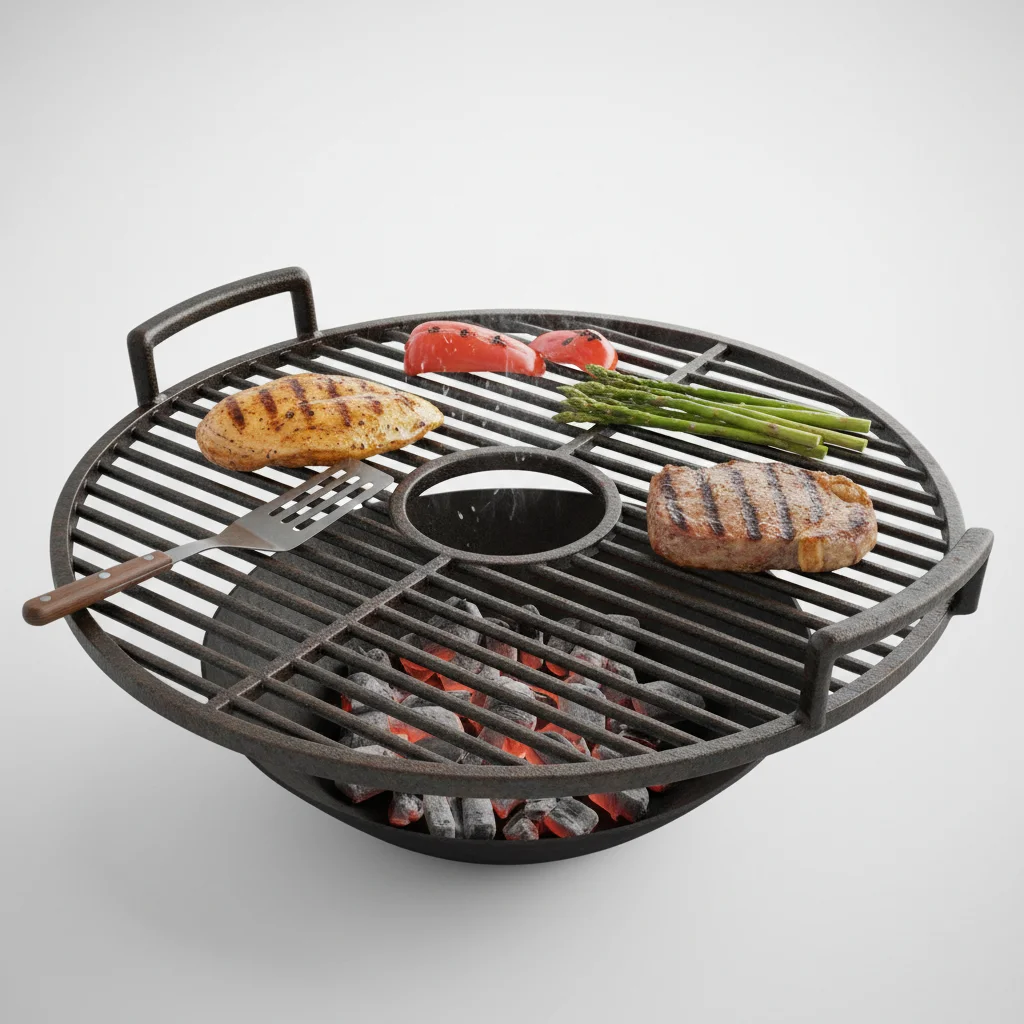
Fire pit cooking grates are a valuable addition for anyone looking to expand their outdoor culinary repertoire beyond s’mores and hot dogs. While not strictly essential for every fire pit owner, a cooking grate significantly enhances the versatility and quality of meals prepared over an open flame. They provide a stable, elevated surface for pots, pans, and direct grilling, transforming your fire pit into a functional outdoor kitchen.
The primary benefit of a cooking grate is the ability to achieve more consistent heat distribution and prevent food from falling directly into the flames or ash. This control is crucial for cooking a wider variety of dishes, from perfectly seared steaks to simmering stews. Without a grate, direct cooking over an open fire can be messy and challenging, often resulting in burnt exteriors and undercooked interiors.
Types of Fire Pit Cooking Grates
There are several types of fire pit cooking grates available, each with distinct features. Swivel grates are popular for their convenience, allowing you to easily move food on and off the heat without reaching directly over the fire. Adjustable height grates offer even greater control, letting you fine-tune the cooking temperature by raising or lowering the grate closer to or further from the coals. Flat grates, while simpler, are often more affordable and can be placed directly over the fire pit rim or on a separate stand.
Material is another key consideration. Stainless steel grates are durable, rust-resistant, and easy to clean, making them a popular choice for frequent use. Cast iron grates offer excellent heat retention and distribution, ideal for searing, but require more maintenance to prevent rust. Chrome-plated steel grates are a budget-friendly option but may not last as long as stainless steel or cast iron.
Benefits of Using a Cooking Grate
Using a fire pit cooking grate opens up a world of culinary possibilities. You can grill burgers, sausages, and vegetables with ease, achieving that desirable smoky flavor. Beyond grilling, a grate allows you to use cast iron skillets, Dutch ovens, and even coffee percolators directly over the fire, enabling you to prepare everything from breakfast to dinner.
The elevated surface also promotes healthier cooking by allowing fats and oils to drip away from your food, rather than pooling around it. This not only makes for tastier meals but also reduces flare-ups, making the cooking process safer and more enjoyable. Furthermore, a grate keeps your cooking utensils and cookware clean by preventing direct contact with ash and embers.
Choosing the Right Grate for Your Fire Pit
|
Our Picks for the Best Fire Pit in 2026
As an Amazon Associate I earn from qualifying purchases.
|
||
| Num | Product | Action |
|---|---|---|
| 1 | SINGLYFIRE 36 Inch Fire Pits for Outside Large Outdoor Wood Burning Crossweave firepit Heavy Duty Steel Bronze Bonfire Pit for Patio Backyard Garden with BBQ Grate,Spark Screen,Log Grate,Poker |

|
| 2 | HGD 20 Inch Smokeless Firepit with Grill, Portable Wood Burning Fire Pit for Camping & Backyard, Stainless Steel Outdoor Fireplace with Travel Bag, Easy Setup & Compact Storage - Foldable Design |
|
| 3 | Kingson 26" Outdoor Fire Pit with Grill & Mesh Cover, Wood Burning Steel Firepit with Poker & Star Spark Screen, Heavy Duty Patio Fire Bowl for Backyard, Camping & Garden |
|
| 4 | BALI OUTDOORS Fire Pit with Poker, 32 inch Outdoor Fire Pit Patio, Wood Burning Firepits for Outside with Grill |
|
| 5 | Fire Beauty Fire Pit for Outside Wood Burning,BBQ Grill Steel Fire Bowl with Spark Screen Cover,Log Grate,Poker for Camping Beach Bonfire Picnic Backyard Garden |
|
| 6 | Fire Pit - 32-Inch Outdoor Wood Burning Firepit with Screen, Poker, and Cover - Outdoor Fire Pits for Backyard, Deck, or Patio by Pure Garden (Black) |
|
| 7 | Wisteria Lane 3 in 1 43" Extra Large Fire Pit for Outside Wood Burning with 2 Adjustable Grills, Outdoor Fireplace with Lid and Fire Poker, BBQ & Bonfire & Round Metal Table for Patio, Backyard |
|
| 8 | Fire Beauty 26" Steel Fire Pit with Grill & Diamond Mesh Design,360° Airflow Tech for 80% Less Smoke,XL Flames,Heavy-Duty Portable Outdoor Fire Bowl for Camping, Backyard, Beach (22lbs, 4 Handles) |
|
| 9 | CIAYS Smokeless Firepit, 19 Inch Fire Pit for Camping with Patented Technology, Portable Fire Pit for Outside with Steel Grill Rack, Fire Poker, and Bag, Easy Setup and Storage, Wood Burning |
|
| 10 | Fire Pit - 32-Inch Outdoor Wood Burning Firepit with Screen, Poker, and Cover - Outdoor Fire Pits for Backyard, Deck, or Patio by Pure Garden (Black) |
|
When selecting a fire pit cooking grate, consider the size and shape of your existing fire pit. Measure the diameter or dimensions to ensure a proper fit. If your fire pit has a specific design, such as a built-in ledge, look for grates designed to sit securely on it. For freestanding grates, ensure the legs or support system are stable on your chosen surface.
Think about the types of meals you plan to cook. If you’re primarily grilling, a simple flat grate might suffice. For more elaborate cooking, an adjustable or swivel grate will offer greater flexibility. Also, consider the weight and portability if you plan to take your grate on camping trips or to different outdoor locations.
- Measure your fire pit’s diameter or dimensions for a perfect fit.
- Consider the material: stainless steel for durability, cast iron for heat retention.
- Decide between swivel, adjustable, or flat grates based on cooking needs.
- Check for sturdy construction and ease of cleaning.
- Ensure compatibility with your fire pit’s design and support.
Maintenance and Safety Tips
Proper maintenance is crucial for extending the life of your fire pit cooking grate. Always clean the grate after each use, removing any food residue with a wire brush. For cast iron grates, seasoning with oil after cleaning will prevent rust. Store your grate in a dry place to protect it from the elements.
Safety is paramount when cooking over an open flame. Always use heat-resistant gloves when handling a hot grate. Ensure the grate is stable and securely positioned before placing food or cookware on it. Keep a fire extinguisher or a bucket of water nearby in case of unexpected flare-ups. Never leave a cooking fire unattended, especially when children or pets are present.
In conclusion, while you can certainly enjoy a fire pit without a cooking grate, adding one significantly enhances its utility and your outdoor cooking experience. It provides the control and versatility needed to prepare a wider array of delicious meals, making your fire pit a true centerpiece for outdoor entertaining.
Cooking gear we tested in our own kitchens
Practical specs, not advice. Unsubscribe anytime.
