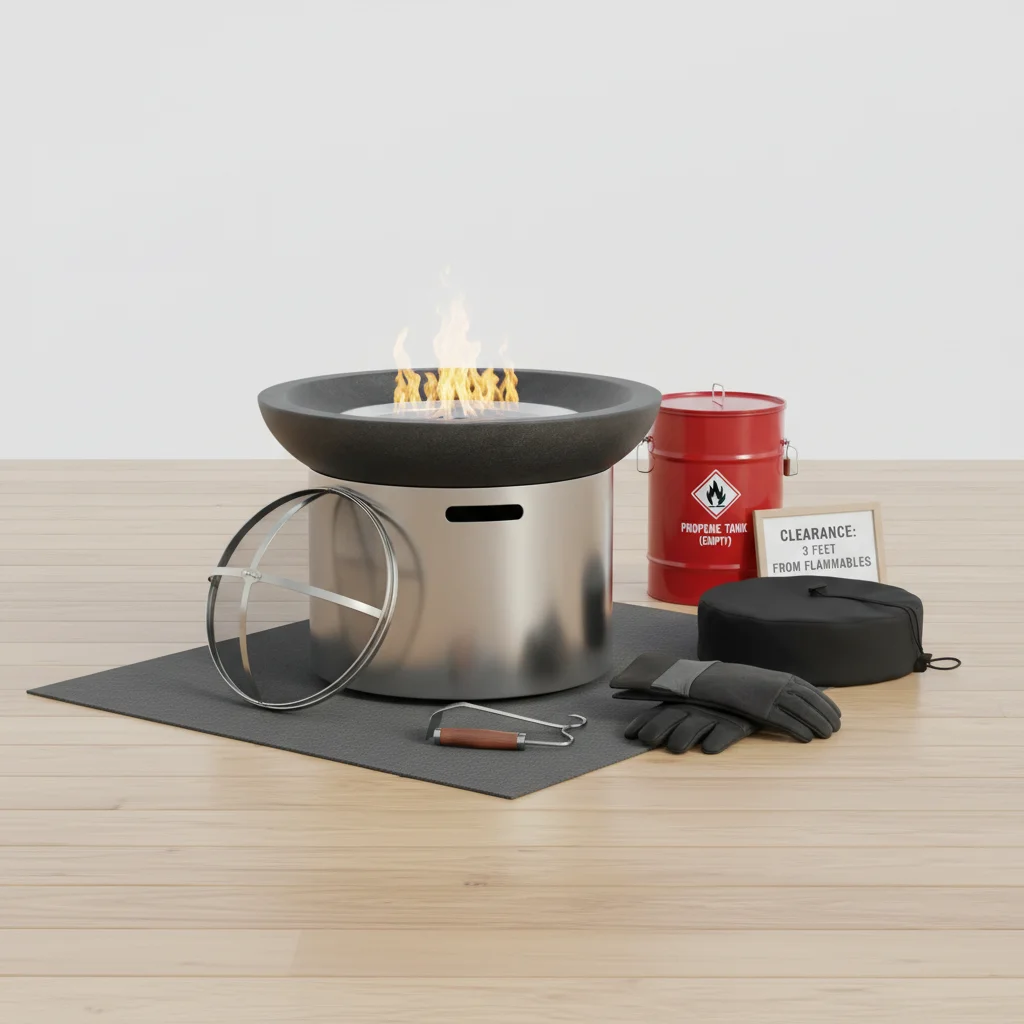
Ensuring propane fire pit safety is paramount for a worry-free outdoor experience. There are five essential tips to follow to prevent accidents and enjoy your fire pit responsibly. From proper setup to regular maintenance, understanding these guidelines will help you keep your backyard gatherings safe and enjoyable for everyone.
Proper Setup and Placement
The first step in propane fire pit safety is correct setup and placement. Always position your fire pit on a non-combustible surface, such as concrete, pavers, or gravel. Avoid placing it under low-hanging branches, awnings, or any other overhead obstructions. Maintain a minimum clearance of 10 feet from any structures, fences, or flammable materials. Ensure the propane tank is placed on a level surface and is not directly underneath the fire pit itself, allowing for adequate ventilation and easy access to the shut-off valve. Always check for any leaks before lighting by applying a soapy water solution to connections; if bubbles appear, tighten the connection or replace the hose.
Regular Maintenance and Inspection
Consistent maintenance is crucial for long-term propane fire pit safety. Before each use, inspect the hose for cracks, kinks, or damage. Check all connections to ensure they are tight and secure. Clean the burner and lava rocks or fire glass regularly to remove debris that could obstruct gas flow or cause flare-ups. If you notice any rust or corrosion on metal components, address it promptly to prevent further deterioration. Store your fire pit in a dry, covered area when not in use, especially during the off-season, to protect it from the elements.
- Inspect hose and connections for damage or leaks.
- Clean burner and media (lava rocks/fire glass) regularly.
- Check for rust or corrosion on metal parts.
- Store properly when not in use.
- Never leave a lit fire pit unattended.
Safe Lighting and Operation Procedures
|
Our Picks for the Best Fire Pit in 2026
As an Amazon Associate I earn from qualifying purchases.
|
||
| Num | Product | Action |
|---|---|---|
| 1 | SINGLYFIRE 36 Inch Fire Pits for Outside Large Outdoor Wood Burning Crossweave firepit Heavy Duty Steel Bronze Bonfire Pit for Patio Backyard Garden with BBQ Grate,Spark Screen,Log Grate,Poker |

|
| 2 | BALI OUTDOORS Fire Pit with Poker, 32 inch Outdoor Fire Pit Patio, Wood Burning Firepits for Outside with Grill |
|
| 3 | HGD 20 Inch Smokeless Firepit with Grill, Portable Wood Burning Fire Pit for Camping & Backyard, Stainless Steel Outdoor Fireplace with Travel Bag, Easy Setup & Compact Storage - Foldable Design |
|
| 4 | Fire Pit - 32-Inch Outdoor Wood Burning Firepit with Screen, Poker, and Cover - Outdoor Fire Pits for Backyard, Deck, or Patio by Pure Garden (Black) |
|
| 5 | Wisteria Lane 3 in 1 43" Extra Large Fire Pit for Outside Wood Burning with 2 Adjustable Grills, Outdoor Fireplace with Lid and Fire Poker, BBQ & Bonfire & Round Metal Table for Patio, Backyard |
|
| 6 | Fire Beauty 26" Steel Fire Pit with Grill & Diamond Mesh Design,360° Airflow Tech for 80% Less Smoke,XL Flames,Heavy-Duty Portable Outdoor Fire Bowl for Camping, Backyard, Beach (22lbs, 4 Handles) |
|
| 7 | Fire Beauty Fire Pit for Outside Wood Burning,BBQ Grill Steel Fire Bowl with Spark Screen Cover,Log Grate,Poker for Camping Beach Bonfire Picnic Backyard Garden |
|
| 8 | Kingson 26" Outdoor Fire Pit with Grill & Mesh Cover, Wood Burning Steel Firepit with Poker & Star Spark Screen, Heavy Duty Patio Fire Bowl for Backyard, Camping & Garden |
|
| 9 | CIAYS Smokeless Firepit, 19 Inch Fire Pit for Camping with Patented Technology, Portable Fire Pit for Outside with Steel Grill Rack, Fire Poker, and Bag, Easy Setup and Storage, Wood Burning |
|
| 10 | Fire Pit - 32-Inch Outdoor Wood Burning Firepit with Screen, Poker, and Cover - Outdoor Fire Pits for Backyard, Deck, or Patio by Pure Garden (Black) |
|
Lighting your propane fire pit safely involves a few key steps. Always open the propane tank valve slowly to allow gas to flow gradually. Then, ignite the burner according to the manufacturer’s instructions, typically by turning the control knob to the ‘on’ position and pressing the igniter button. Never lean over the fire pit while lighting it. Once lit, adjust the flame to a moderate height. Never leave a lit fire pit unattended, especially around children or pets. Keep a fire extinguisher or a bucket of sand nearby as a precautionary measure.
Understanding Propane Tank Handling
Proper handling of propane tanks is a critical aspect of propane fire pit safety. Always transport propane tanks upright and secure them to prevent them from tipping over. Never store propane tanks indoors or in enclosed spaces, as gas leaks can accumulate and pose a significant hazard. When not in use, ensure the tank valve is fully closed and the tank is disconnected from the fire pit. Always purchase propane tanks from reputable dealers and check the tank’s expiration date, as older tanks may not meet current safety standards.
Emergency Preparedness and Shut-Off
Being prepared for emergencies is the final, vital tip for propane fire pit safety. Familiarize yourself with how to quickly shut off the gas supply at the tank valve in case of an emergency. If you smell gas, immediately turn off the tank valve, extinguish any open flames, and evacuate the area. Do not attempt to light the fire pit if you suspect a leak. In the event of a small fire, use a fire extinguisher or smother it with a non-flammable cover. For larger fires, call emergency services immediately. Always follow the manufacturer’s guidelines for your specific fire pit model.
Cooking gear we tested in our own kitchens
Practical specs, not advice. Unsubscribe anytime.
