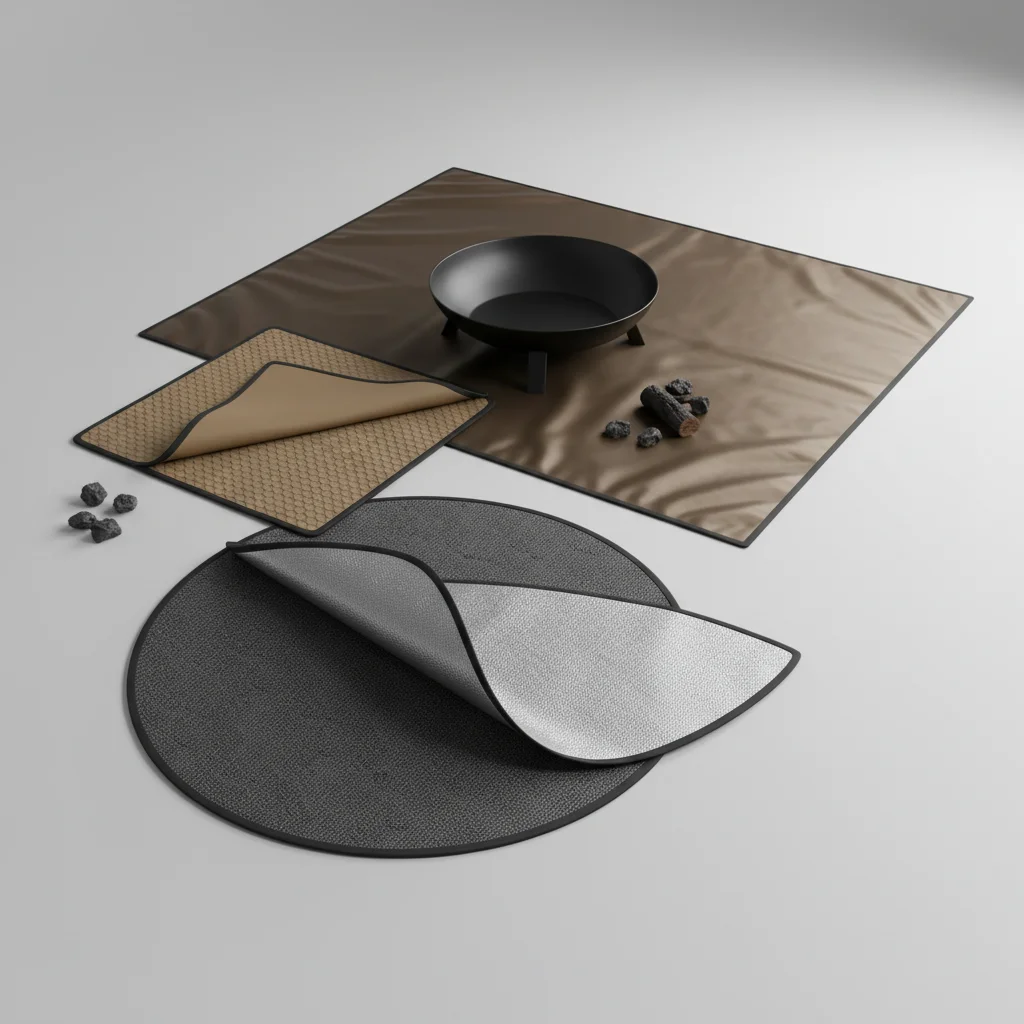
Fire pit mats are essential for protecting your deck or patio from heat damage, embers, and spills. While not every fire pit setup absolutely requires one, they offer significant benefits, especially for wood-burning fire pits or those placed on combustible surfaces like wooden decks or composite patios. A good fire pit mat can prevent costly damage and ensure safer outdoor enjoyment.
Why Fire Pit Mats Are Crucial for Deck and Patio Safety
Fire pit mats act as a crucial barrier between your fire pit and the surface beneath it. They are typically made from heat-resistant materials like fiberglass, silicone, or volcanic rock fibers, designed to withstand high temperatures and prevent heat transfer. This protection is vital because even a small ember or a stray spark can scorch or ignite a deck, while prolonged heat can cause discoloration and structural damage over time.
Beyond heat protection, these mats also catch ash, grease, and food spills, making cleanup easier and preventing stains on your outdoor surfaces. This dual function of heat resistance and mess containment makes them a valuable addition for anyone regularly using a fire pit on a sensitive surface.
Types of Fire Pit Mats and Their Best Uses
There are several types of fire pit mats, each suited for different needs. Fiberglass mats with silicone coatings are excellent for high heat resistance and are often used under wood-burning fire pits. They are durable and easy to clean. Another common type is made from volcanic rock fibers, offering superior heat protection and a more rugged appearance, ideal for heavy-duty use.
For gas fire pits, which generally produce less direct heat to the ground, lighter-duty mats or even simple non-combustible pads might suffice. However, it’s always safer to opt for a mat with good heat resistance to account for any potential malfunctions or unexpected heat transfer. Consider the material of your deck or patio – wood and composite surfaces demand higher protection than concrete or stone.
Key Features to Look for in a Quality Fire Pit Mat
|
Our Picks for the Best Fire Pit in 2026
As an Amazon Associate I earn from qualifying purchases.
|
||
| Num | Product | Action |
|---|---|---|
| 1 | HGD 20 Inch Smokeless Firepit with Grill, Portable Wood Burning Fire Pit for Camping & Backyard, Stainless Steel Outdoor Fireplace with Travel Bag, Easy Setup & Compact Storage - Foldable Design |

|
| 2 | CIAYS Smokeless Firepit, 19 Inch Fire Pit for Camping with Patented Technology, Portable Fire Pit for Outside with Steel Grill Rack, Fire Poker, and Bag, Easy Setup and Storage, Wood Burning |
|
| 3 | Wisteria Lane 3 in 1 43" Extra Large Fire Pit for Outside Wood Burning with 2 Adjustable Grills, Outdoor Fireplace with Lid and Fire Poker, BBQ & Bonfire & Round Metal Table for Patio, Backyard |
|
| 4 | Fire Pit - 32-Inch Outdoor Wood Burning Firepit with Screen, Poker, and Cover - Outdoor Fire Pits for Backyard, Deck, or Patio by Pure Garden (Black) |
|
| 5 | Fire Beauty Fire Pit for Outside Wood Burning,BBQ Grill Steel Fire Bowl with Spark Screen Cover,Log Grate,Poker for Camping Beach Bonfire Picnic Backyard Garden |
|
| 6 | Fire Pit - 32-Inch Outdoor Wood Burning Firepit with Screen, Poker, and Cover - Outdoor Fire Pits for Backyard, Deck, or Patio by Pure Garden (Black) |
|
| 7 | Fire Beauty 26" Steel Fire Pit with Grill & Diamond Mesh Design,360° Airflow Tech for 80% Less Smoke,XL Flames,Heavy-Duty Portable Outdoor Fire Bowl for Camping, Backyard, Beach (22lbs, 4 Handles) |
|
| 8 | SINGLYFIRE 36 Inch Fire Pits for Outside Large Outdoor Wood Burning Crossweave firepit Heavy Duty Steel Bronze Bonfire Pit for Patio Backyard Garden with BBQ Grate,Spark Screen,Log Grate,Poker |
|
| 9 | Kingson 26" Outdoor Fire Pit with Grill & Mesh Cover, Wood Burning Steel Firepit with Poker & Star Spark Screen, Heavy Duty Patio Fire Bowl for Backyard, Camping & Garden |
|
| 10 | BALI OUTDOORS Fire Pit with Poker, 32 inch Outdoor Fire Pit Patio, Wood Burning Firepits for Outside with Grill |
|
When selecting a fire pit mat, several features are paramount. First, check the heat resistance rating; it should be higher than the maximum temperature your fire pit is expected to generate at its base. Second, consider the size – it should extend beyond the footprint of your fire pit to catch any stray embers or ash. A good rule of thumb is to have at least a 6-inch perimeter around the fire pit’s base.
Durability and ease of cleaning are also important. Look for mats that are weather-resistant and can be easily wiped down or hosed off. Some mats also come with non-slip backings, which can be beneficial for safety, especially on smooth surfaces.
Installation and Maintenance Tips for Fire Pit Mats
Installing a fire pit mat is straightforward: simply place it on your desired surface before setting up your fire pit. Ensure the mat lies flat and covers the entire area beneath and immediately surrounding the fire pit. For maintenance, regularly clean the mat after each use to remove ash, grease, and debris. This not only keeps it looking good but also prevents any buildup that could potentially compromise its effectiveness.
Periodically inspect the mat for any signs of wear, tear, or heat damage. If you notice any significant damage, it’s time to replace it to ensure continued protection. Proper storage during off-seasons, such as rolling it up and keeping it in a dry place, can also extend its lifespan.
- Always check the mat’s heat resistance rating against your fire pit’s heat output.
- Ensure the mat extends at least 6 inches beyond the fire pit’s base.
- Clean the mat regularly to prevent buildup and maintain effectiveness.
- Inspect for wear and tear; replace damaged mats promptly.
- Store the mat properly during off-seasons to prolong its life.
When You Might Not Need a Fire Pit Mat
While highly recommended, there are specific scenarios where a fire pit mat might be less critical. If your fire pit is placed directly on a non-combustible surface like bare earth, gravel, or a solid concrete slab that you’re not concerned about staining, the primary need for a mat diminishes. Similarly, if you have a very small, enclosed fire pit that generates minimal heat downwards and is used infrequently, you might consider skipping a mat. However, even in these cases, a mat can still offer benefits for cleanliness and peace of mind.
Cooking gear we tested in our own kitchens
Practical specs, not advice. Unsubscribe anytime.
